Fire Door Inspections Explained for Property Managers
Fire doors play a critical role in protecting lives and property by containing fire and smoke, allowing safe evacuation and supporting effective fire compartmentation. For property managers, understanding fire door inspections is essential to maintaining compliance, managing risk, and ensuring occupant safety. At Verus Group, we regularly support property managers across the UK with professional fire door inspections and remediation, helping buildings remain safe and compliant.
Why Fire Door Inspections Are So Important
Fire doors are only effective if they perform as designed in the event of a fire. Over time, everyday use, poor installation, or unapproved alterations can compromise their integrity. Even small defects, such as damaged seals or incorrect gaps, can significantly reduce fire resistance.
UK legislation, including the
Regulatory Reform (Fire Safety) Order 2005 and updates under the
Fire Safety Act, places clear responsibilities on duty holders and property managers to ensure fire doors are regularly inspected and maintained. Failure to do so can result in serious safety risks, enforcement action, and reputational damage.
What a Fire Door Inspection Involves
A fire door inspection is a detailed assessment carried out by a competent person to confirm that each door meets the required fire safety standards. Inspections typically cover:
Door leaf condition, including damage or warping- Correct door frame installation and fixing
- Gaps around the door, ensuring they are within tolerances
- Hinges, closers, and ironmongery functionality
- Fire and smoke seals, ensuring they are intact and effective
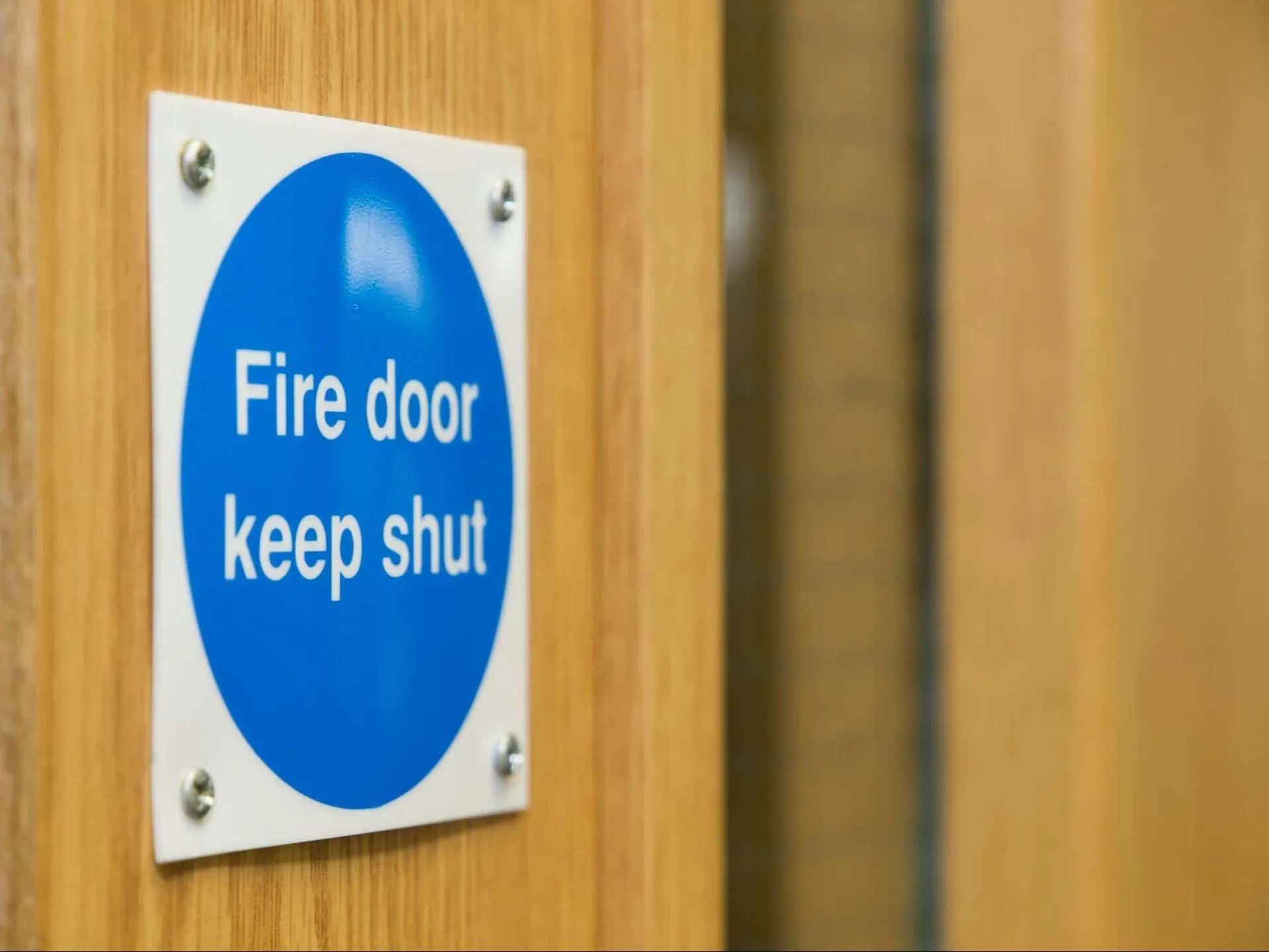
- Certification and signage compliance
At Verus Group, our inspections are thorough and methodical, with findings clearly documented to support ongoing compliance and future audits.
How Often Should Fire Doors Be Inspected?
Best practice guidance recommends that fire doors in high-traffic or high-risk areas are inspected every six months. In residential buildings over 11 metres, communal fire doors should be checked quarterly, with flat entrance doors inspected at least annually.
Regular inspections allow issues to be identified early, reducing the likelihood of costly fire door remediation works later. For property managers overseeing multiple sites, planned inspection programmes are one of the most effective ways to manage fire safety responsibilities.
Common Fire Door Issues We See
During inspections, several recurring issues are frequently identified. These include missing or painted-over fire seals, damaged door leaves, faulty self-closing mechanisms, and non-compliant hardware. In some cases, doors may not be fire-rated at all, despite being installed in fire-resisting locations.
Addressing these defects promptly through fire door repairs or replacements is essential to maintaining effective passive fire protection throughout the building.
Supporting Property Managers with Compliance
Managing fire safety across residential, commercial, or mixed-use properties can be complex. Verus Group works closely with property managers to provide clear, practical guidance alongside our inspection services. Where issues are identified, we can also deliver fire door maintenance, remediation, or full replacement, ensuring a seamless approach from survey to completion.
Our experience across sectors such as social housing, healthcare, education, and commercial construction means we understand the specific challenges property managers face and tailor our services accordingly.
Contact Us
Fire door inspections are not just a legal requirement; they are a vital part of protecting people and property. If you are a property manager seeking reliable, professional fire door inspection services, Verus Group is here to help.
Contact our team today to arrange a fire door inspection or to discuss your wider passive fire protection needs.