Fire Door Installation: Protecting Lives and Property Through Compliance and Quality
When a fire breaks out in a building, every second counts. Flames can spread with terrifying speed, but it is often smoke, invisible, toxic, and fast-moving, that poses the greatest immediate danger to occupants. In those critical minutes between ignition and evacuation, one of the most powerful lines of defence is one that most people walk past every single day without a second thought: the fire door.
For developers, contractors, and facilities managers across the UK, understanding the importance of professional fire door installation is not simply a matter of regulatory box-ticking. It is a fundamental responsibility and one that directly determines whether a building is genuinely safe or merely compliant on paper.
What Is a Fire Door and Why Does It Matter?
A fire door is a specially engineered door assembly designed to resist the passage of fire, heat, and smoke for a defined period, typically 30 minutes (FD30) or 60 minutes (FD60). Unlike a standard internal door, a certified fire door is a tested system comprising the door leaf, frame, hinges, intumescent seals, smoke seals, and ironmongery. Every component must work together precisely as tested and certified.
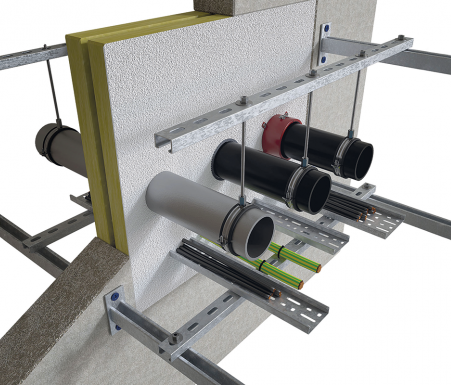
Fire doors serve a dual purpose within passive fire protection systems. When closed, they compartmentalise a building, containing a fire and limiting its spread between rooms, floors, and escape routes. When used on escape corridors and stairwells, they protect the means of escape, buying the time needed for occupants to evacuate safely and for emergency services to respond.
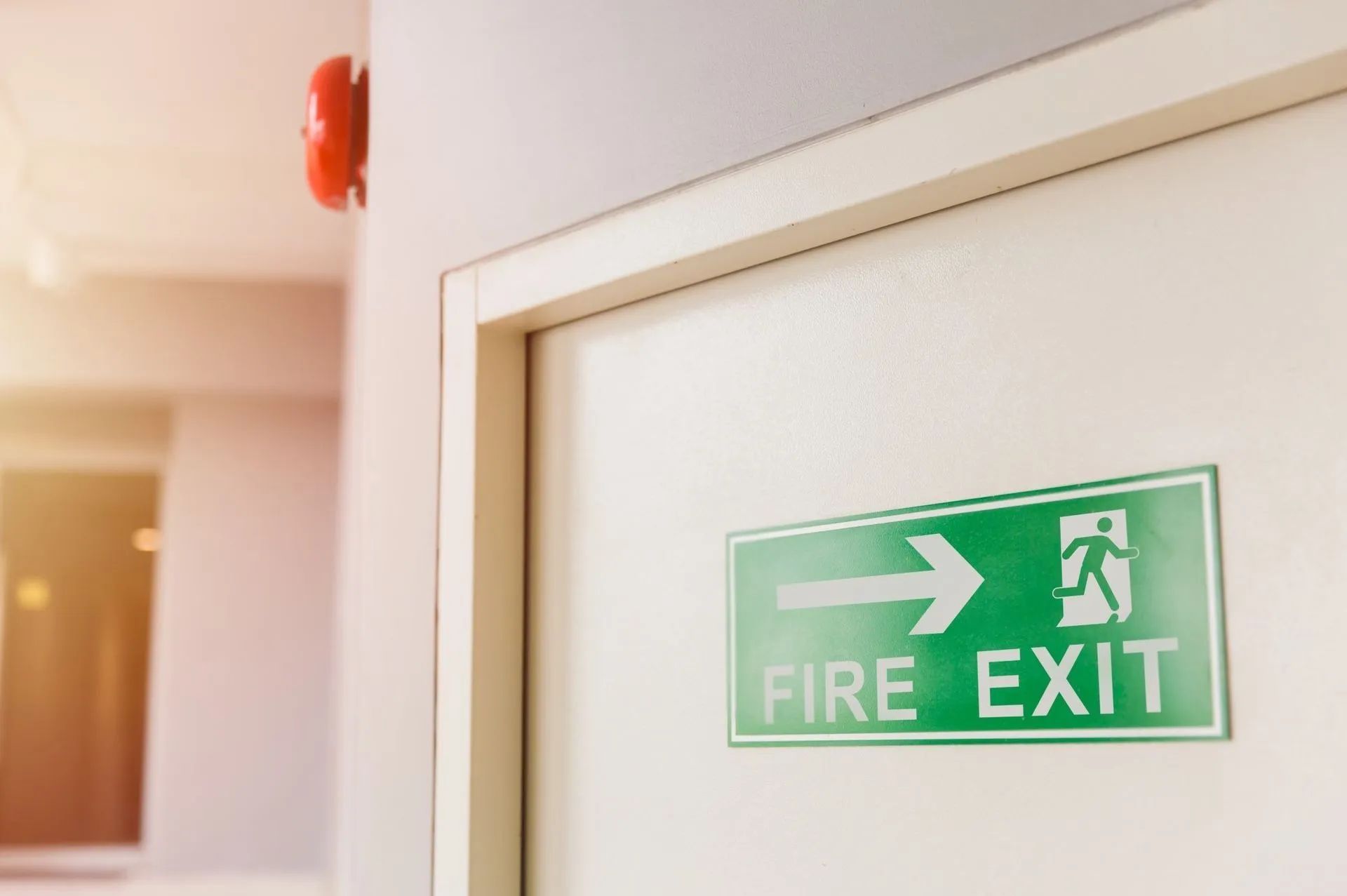
In commercial buildings like offices, hotels, hospitals, schools, and residential blocks, commercial fire doors are not optional features. They are legally required elements of a building's fire strategy.
The Legal Framework: UK Fire Regulations You Need to Know
Fire door requirements in the UK are governed by a robust framework of legislation and guidance:
- The Regulatory Reform (Fire Safety) Order 2005 (FSO) places a legal duty on the "responsible person" — typically a building owner, employer, or managing agent — to ensure adequate fire precautions are in place, including the installation and maintenance of fire doors.
- Building Regulations Approved Document B sets out the technical requirements for fire safety in buildings, including specifications for fire resistance and means of escape.
- BS 8214:2016 provides the code of practice specifically for fire door assemblies using timber-based products, covering specification, installation, and maintenance.
- The Fire Safety Act 2021 and Building Safety Act 2022 have further strengthened requirements, particularly for higher-risk residential buildings, placing greater scrutiny on fire door quality, documentation, and ongoing inspection.
For facilities managers and building owners, these regulations carry real consequences. Non-compliance can result in enforcement action, prohibition notices, and, in the event of a fire, serious legal liability. But beyond the legal risk, the human cost of a poorly installed or non-compliant fire door can be catastrophic.
Why Professional Fire Door Installation Is Non-Negotiable
Many people assume that installing a fire door is no different from fitting any other internal door. This is a dangerous misconception. Fire door fitting is a specialist discipline that demands precision, certified products, and a thorough understanding of how each component interacts.
Here is why professional installation matters:
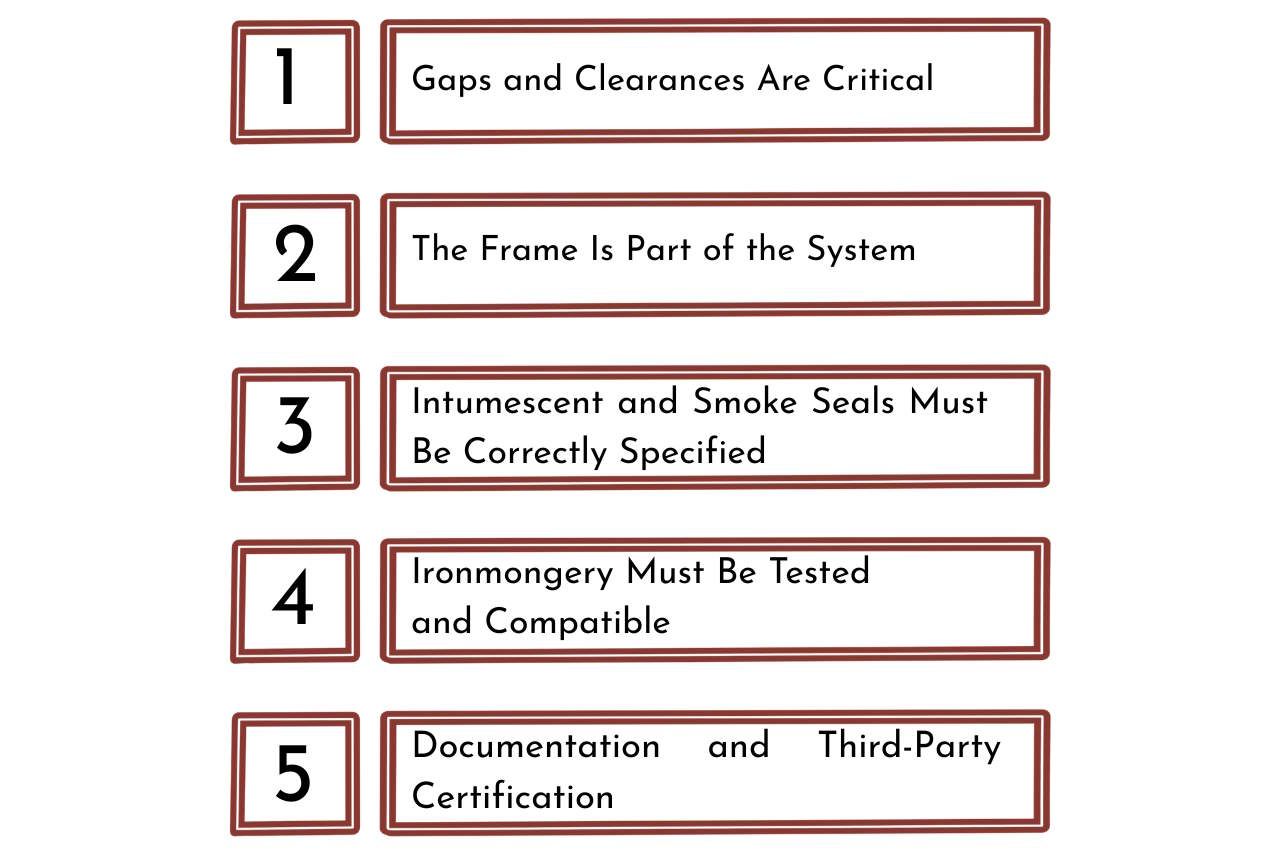
1. Gaps and Clearances Are Critical
A fire door must be hung with precise clearances, typically no more than 3mm at the sides and top, and 8mm at the bottom when fitted with a threshold seal. Even a gap of a few millimetres beyond specification can allow smoke to penetrate in minutes. These tolerances cannot be achieved by guesswork; they require skilled, experienced fire door contractors working to established standards.
2. The Frame Is Part of the System
A certified fire door leaf installed into a non-certified or poorly fitted frame will not perform as tested. The entire door assembly, including the structural frame and its fixing into the surrounding wall, must be specified, installed, and documented as part of a complete, tested system.
3. Intumescent and Smoke Seals Must Be Correctly Specified
Intumescent strips expand when exposed to heat, sealing the gap around the door to prevent fire penetration. Smoke seals prevent cold smoke ingress at ambient temperatures. The correct seal types must be specified for the door rating and correctly installed, in the right groove depth, with no breaks or gaps. Incorrect specification or poor installation renders these critical components ineffective.
4. Ironmongery Must Be Tested and Compatible
Door closers, hinges, latches, and hold-open devices must all be tested as compatible with the certified door assembly. Using non-approved ironmongery, even a different brand of hinge, can invalidate the fire door's certification and compromise its performance in a fire.
5. Documentation and Third-Party Certification
Professional fire door contractors provide full documentation of installed doors, including product certificates, installation records, and photographic evidence. This is increasingly required by building control, insurers, and the Golden Thread of information required under the
Building Safety Act 2022 for higher-risk buildings.
Choosing Certified Fire Doors: What to Look For
Not all fire doors are equal. When specifying certified fire doors for a project, look for:
- Third-party certification from a UKAS-accredited body such as BM TRADA, Certifire, or IFC Certification. This provides assurance that the door has been independently tested and assessed.
- CE or UKCA marking confirming conformity with the relevant standards.
- Full traceability — the ability to trace every component back to a tested specification. Certified fire doors should carry a label or plug identifying the certification body, the standard, and the fire resistance rating.
- Supply from reputable manufacturers with documented test evidence for the specific door assembly, including the frame, glazing (if applicable), and hardware.
Fire Door Replacement: When Is It Needed?
Even correctly installed fire doors deteriorate over time. Fire door replacement becomes necessary when:
- Doors show visible damage — splits, warping, or impact damage to the leaf or frame.
- Seals are missing, damaged, or compressed beyond usefulness.
- Gaps exceed the permitted tolerances due to building movement or wear.
- Ironmongery fails to function correctly — doors that do not close and latch fully from any position are non-compliant.
- The door predates current standards and cannot be brought into compliance through maintenance.
The Regulatory Reform (Fire Safety) Order requires responsible persons to ensure fire doors are maintained in efficient working order. In practice, this means regular inspection, at least every six months in high-traffic areas, and annually elsewhere, with prompt replacement when doors fall below standard.
The Verus Group Approach to Fire Door Installation
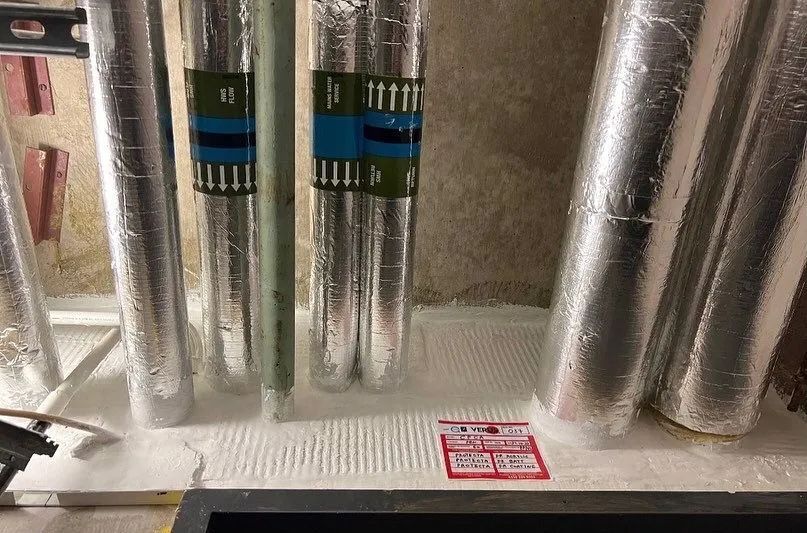
At Verus Group, fire door installation is delivered as part of a fully integrated passive fire protection service. Our teams are trained and experienced in the installation of commercial fire doors across a wide range of building types, from high-rise residential blocks and social housing schemes to hospitals, educational facilities, hotels, and commercial developments.
We work with certified fire door assemblies from approved manufacturers, providing full documentation and certification for every installation. Our approach covers everything from initial fire door surveys and specification through to supply, installation, and ongoing maintenance and inspection, giving clients a single, accountable partner for their fire door obligations.
All our work is carried out in compliance with BS 8214:2016, Approved Document B, and the requirements of the Regulatory Reform (Fire Safety) Order. As a BM TRADA-accredited contractor, clients can be confident that our installations meet the highest standards of quality and compliance.
Installation Quality Is Life Safety Quality
A fire door is only as effective as its installation. The most expensively specified, third-party certified fire door will fail to protect building occupants if it is fitted with the wrong clearances, incompatible hardware, or into a non-certified frame. In the context of UK fire safety law and the very real human consequences of fire in occupied buildings, there is no room for compromise.
For developers, contractors, and facilities managers, the message is clear: fire door installation must be treated as the specialist, safety-critical discipline it is. Engage qualified, accredited fire door contractors. Specify certified products. Maintain documentation. And never assume that a door which looks like a fire door is performing like one.
To find out how Verus Group can support your fire door installation, replacement, or inspection requirements, visit www.verusgroup.co.uk or call
0330 220 0303.